
Have you been seeing more flashes of vibrant orange and black in your garden lately? If so, you are not alone! The latest overwintering numbers are finally in, and there is fantastic news for our favorite pollinators this season.
The Numbers Are Up!
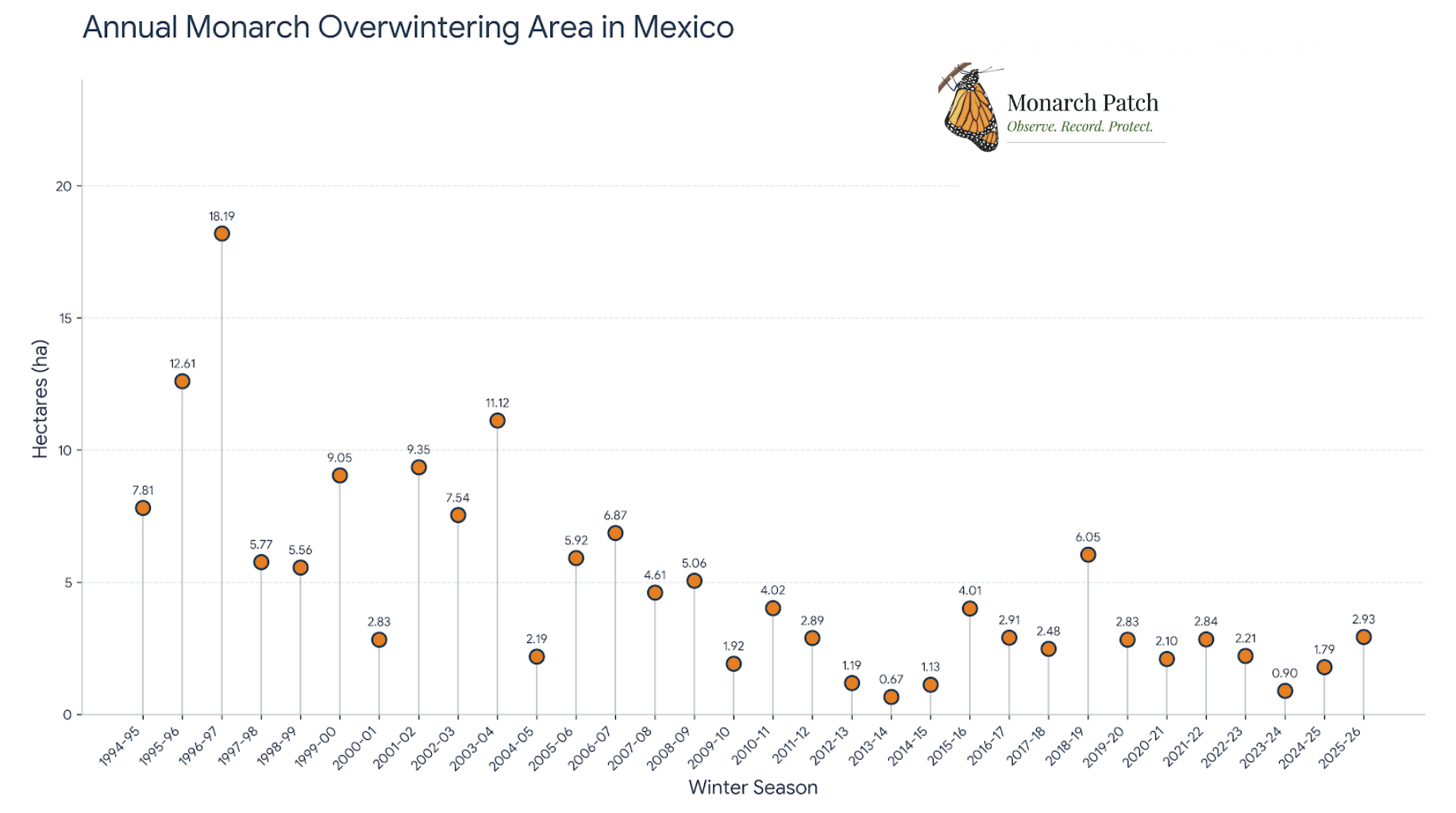
According to recent reports, nine overwintering monarch colonies were located this winter season, occupying a total forest area of 2.93 hectares.
This is a massive 64% increase from the previous season, which saw colonies covering only 1.79 hectares.
We owe a huge thank you to the organizations tracking this vital data in the forests of Mexico. This counting effort is a collaboration conducted by the WWF-Telmex Telcel Foundation Alliance, working closely with the National Commission of Natural Protected Areas (CONANP), the National Autonomous University of Mexico (UNAM), and the Monarch Butterfly Biosphere Reserve (MBBR).
Why the Rebound?
You might be wondering what caused this wonderful bump in the monarch population. Experts note that the year-to-year size of the eastern monarch population is primarily determined by weather conditions.
Favorable weather during the breeding season and the long migration south can significantly reduce the mortality rate.
This makes a huge difference, as data suggests that only about 1 in 4 or 5 wild monarchs successfully survive the long journey to reach the overwintering sites in Mexico.
The Reality Check: Numbers Are Still Low
While a 64% increase is absolutely worth celebrating, we cannot hang up our gardening gloves just yet. To put things into perspective, an overwintering population of around 3 hectares has just been the average over recent years.
This population scale is still much smaller than in the past when more natural habitat was available to the butterflies.
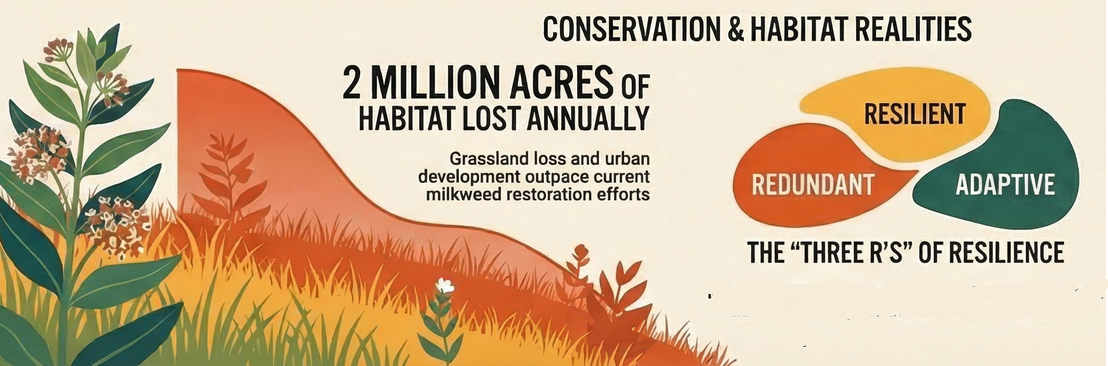
The biggest ongoing problem in monarch conservation is habitat loss
Experts estimate that we are currently losing about a million acres of vital grassland habitat each year to agriculture, with potentially another million acres lost to urban development.
Unfortunately, habitat restoration efforts are currently not keeping pace with these massive annual losses.
How You Can Help: Plant, Track, and Use the Monarch Patch App
So, what can everyday nature lovers do to help?
1. Plant Milkweed: Monarchs rely on milkweed as the sole food source for their caterpillars. Restoring local habitats by planting native milkweed and nectar-rich flowers is the absolute most effective way you can help them recover.
2. Participate in Citizen Science: Scientists need your help to understand migration mortality and population dynamics. Participating in citizen science initiatives, such as the tagging programs organized by Monarch Watch, provides essential data that helps track how many butterflies successfully complete the migration.
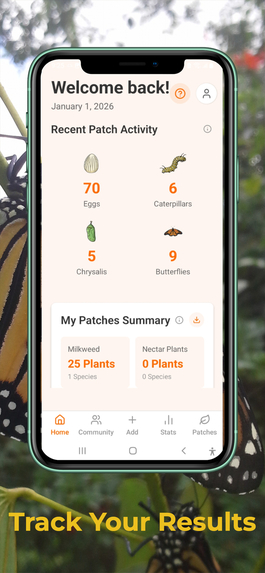
3. Download the Monarch Patch App: You can use the Monarch Patch app to log your new milkweed plantings, report monarch sightings, and connect with a wider community of citizen scientists. By logging your garden into the app, you help researchers build a clearer picture of available monarch habitats and track their incredible journey across the continent!
Every seed planted and every butterfly tracked brings us one step closer to ensuring these magnificent creatures continue to grace our skies for generations to come. Let’s get out there and plant!